
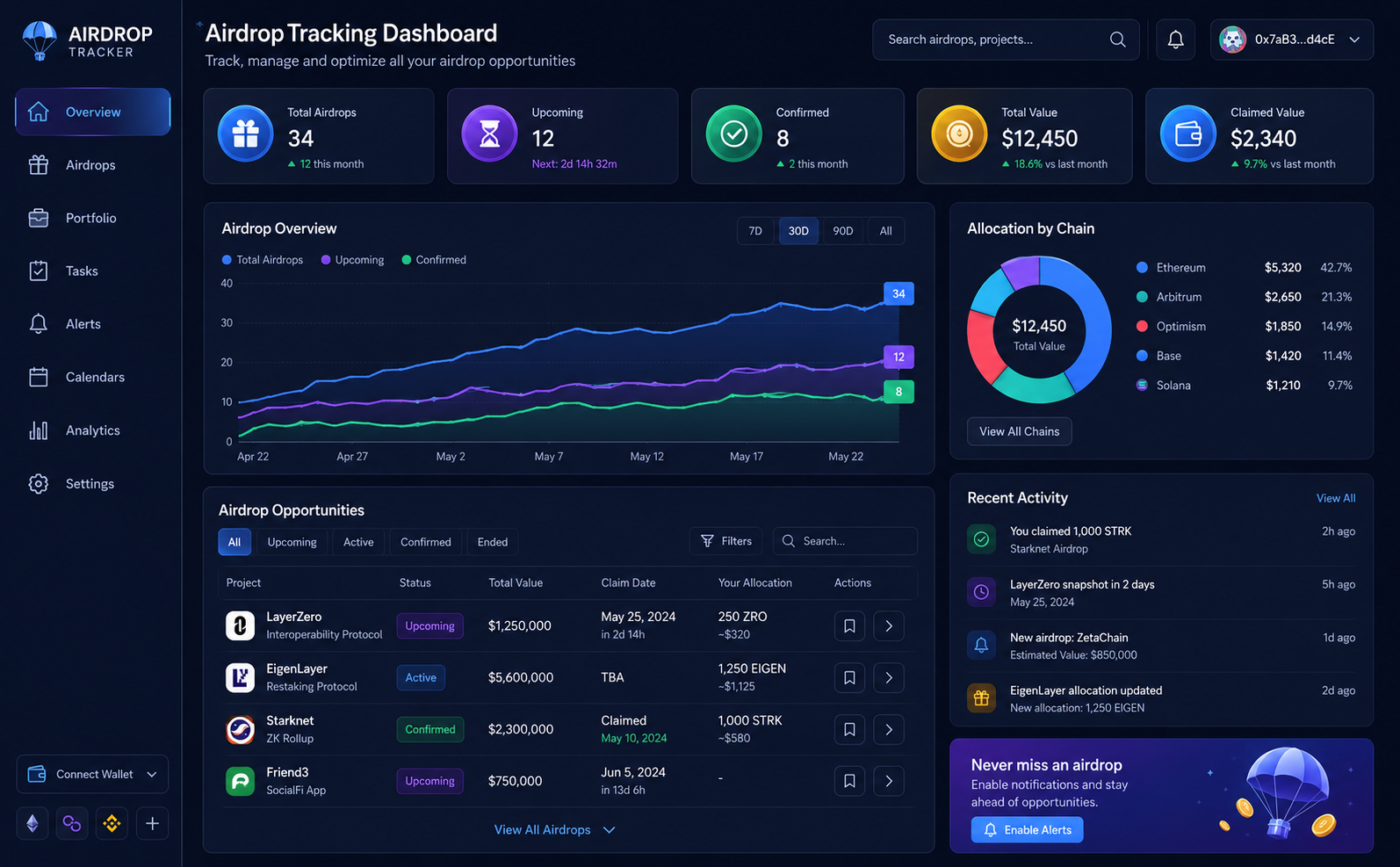
Keeping track of all your crypto activities, especially when chasing potential airdrops, can feel like a full-time job. With so many projects launching and distributing points or tokens, it's easy to lose sight of what you're eligible for.
This is where specialized airdrop tracking dashboards become essential. They help you consolidate information from various chains and protocols, giving you a clear overview of your potential rewards.
What is a crypto airdrop tracking dashboard?
A crypto airdrop tracking dashboard is a tool that helps users monitor their progress across different airdrop campaigns from a single place. Instead of manually checking multiple websites, wallets, and blockchain networks, a dashboard organizes the information and shows which projects you're participating in and what tasks you've completed.
A typical crypto airdrop tracking dashboard may include:
- Connected wallet addresses
- Airdrop campaigns you're eligible for
- Completed and pending tasks
- Points, XP, or reward balances
- Transaction history across supported networks
- Referral statistics
- Estimated reward calculations
- Eligibility status for upcoming token distributions
For example, if you're farming points on projects like Scroll, Linea, LayerZero, Grass, or Kaito, an airdrop tracking dashboard can help you see your activity and progress without visiting each project's website individually.
Why do I need a crypto airdrop tracking dashboard?
You need a crypto airdrop tracking dashboard to efficiently manage your participation in various decentralized finance (DeFi) and Web3 projects, ensuring you don't miss out on valuable token distributions.
Imagine you're interacting with five different blockchain networks, each with its own set of potential airdrop criteria. Manually checking your wallet activity, transaction counts, and specific protocol interactions across all these platforms is incredibly time-consuming and prone to errors.
A dashboard automates this process. For example, if you've used a new layer-2 scaling solution like Arbitrum and also provided liquidity on a decentralized exchange (DEX) on Optimism, a good tracker can show your activity and potential points for both in one view. This saves you hours of manual searching and helps you stay organized.
How do crypto airdrop tracking tools work?
Crypto airdrop tracking tools work by connecting to your blockchain wallets and analyzing your on-chain activity across various networks to identify potential airdrop eligibility and accumulated points.
These platforms typically ask you to connect your wallet (often read-only, meaning they cannot initiate transactions) or input your public wallet address. They then scan public blockchain data for interactions with protocols known or rumored to conduct airdrops.
For instance, a tracker might look for your transactions on a specific testnet, your volume traded on a particular DEX, or your participation in governance votes. It then aggregates this data and presents it in an easy-to-understand format, often showing a 'score' or 'points' for different projects.
What are the best dashboards for tracking crypto airdrop points?
Several dashboards can help you track crypto airdrop points, monitor wallet activity, and stay on top of reward opportunities. While no platform can guarantee an airdrop, these tools make it easier to follow your progress across multiple projects.
Here are five popular options:
1. DropsTab Airdrops: DropsTab offers a dedicated airdrop section where users can track active campaigns, eligibility requirements, and reward opportunities. It also provides portfolio tracking and project information in one place.
2. CryptoRank Airdrop Tracker: CryptoRank is widely used for finding upcoming and ongoing airdrops. Its tracker helps users monitor tasks, participation status, and project updates, making it easier to keep track of multiple campaigns.
3. DeBank: DeBank is primarily a portfolio tracker, but it is also useful for airdrop hunters. By tracking your wallet activity across different networks, it helps you monitor the transactions and interactions that many projects consider when evaluating users for rewards.
4. LayerHub: LayerHub focuses on tracking activity across various blockchain ecosystems. It allows users to monitor their participation in supported projects and can help identify areas where additional activity may improve eligibility.
5. DappRadar: DappRadar tracks wallet interactions across decentralized applications and blockchain networks. Its activity tracking features can help users review their on-chain history and stay organized while participating in multiple airdrop campaigns.
Each of these dashboards offers a different set of features, so the best choice depends on the networks and projects you actively use. Many experienced airdrop hunters use more than one tool to get a complete view of their activity and reward eligibility.
READ ALSO
What is Airdrop Hunter and how does it help?
Airdrop Hunter is a dedicated platform designed to help users discover and track potential crypto airdrops by aggregating information and often providing guides for tasks.
It helps by centralizing information about upcoming and ongoing airdrops, often detailing the specific actions required to qualify. For example, it might list that interacting with a new DeFi protocol on the Base network could lead to an airdrop, then guide you through the steps to complete those interactions.
Users can often connect their wallets to see if they meet certain criteria or track their progress on specific tasks. This makes it easier to manage multiple airdrop strategies without missing critical steps.
How does Earn Alliance track my airdrop eligibility?
Earn Alliance tracks your airdrop eligibility by focusing on gaming-related Web3 projects and rewarding users for engagement within their ecosystem and partner games.
This platform is particularly strong for those interested in play-to-earn (P2E) gaming and NFT airdrops. It often partners directly with game studios to offer exclusive quests or tasks that, upon completion, grant you points or direct eligibility for future token drops.
For instance, playing a specific beta game or holding a particular NFT from a partner project might earn you 'Alliance Points,' which could later be converted into airdropped tokens. It's a more curated approach, focusing on a specific niche within the Web3 space.
Is DeBank a good tool for monitoring airdrop points?
DeBank is an excellent tool for monitoring airdrop points because it offers a comprehensive portfolio tracker that displays your assets and interactions across numerous chains, making it easy to spot potential eligibility.
While not exclusively an "airdrop tracker," DeBank's detailed wallet analysis capabilities are incredibly useful. It shows your historical transactions, protocol interactions, and even your 'DeBank Score,' which can sometimes be a factor in airdrop eligibility for certain projects.
For example, if you've been an early user of a new lending protocol on Arbitrum, DeBank will show your deposits and borrows, allowing you to quickly verify your activity. This broad overview helps you identify which protocols you've engaged with that might later conduct an airdrop.
READ ALSO
What features does Layer3 offer for airdrop point tracking?
Layer3 offers features that gamify Web3 exploration through quests, directly rewarding users with experience points (XP) and sometimes tokens, which can often lead to airdrop eligibility.
The platform is built around interactive quests that guide users through various DeFi protocols, NFT marketplaces, and new blockchain networks. Completing these quests earns you XP and sometimes direct rewards, positioning you favorably for future airdrops from the projects you interact with.
For example, a quest might involve swapping tokens on a new DEX or minting an NFT on a specific chain. By completing these tasks through Layer3, you not only gain experience but also build a verifiable on-chain history that many airdrop criteria look for.
When choosing an airdrop tracking dashboard, it's helpful to compare their core offerings. The following matrix highlights key differences between some popular options to help you decide which best fits your needs.FeatureAirdrop HunterEarn AllianceDeBankLayer3Primary FocusGeneral Airdrop Discovery & TrackingWeb3 Gaming & NFT AirdropsComprehensive DeFi Portfolio TrackingGamified Web3 Quests & ExplorationWallet SupportMulti-chain (via public address/connection)Multi-chain (via public address/connection)Extensive Multi-chain (via public address)Multi-chain (via wallet connection)Point TrackingProject-specific points/criteriaAlliance Points, game-specific rewardsDeBank Score, protocol interactionsXP, quest-specific rewardsTask ManagementOften provides task guidesCurated gaming questsNo direct task managementDirectly guides through tasks/questsCostOften free, some premium featuresFree to useFree to useFree to useUser InterfaceAirdrop-centric, clear listingsGaming-focused, quest-drivenDetailed, data-rich portfolio viewQuest-based, interactive
How can I effectively use an airdrop tracking dashboard?
To effectively use an airdrop tracking dashboard, you should consistently connect your wallets, regularly check for new opportunities, and actively complete the recommended tasks or interactions.
First, connect all your relevant crypto wallets (Metamask, Ledger, etc.) to the dashboard using their secure connection methods, typically read-only public addresses. This ensures the platform can accurately scan your on-chain activity across all your holdings.
Next, make it a habit to log in daily or weekly. Many airdrops have time-sensitive tasks or snapshot dates. For instance, a dashboard might alert you that a new protocol requires users to make at least one transaction every month to qualify. Staying updated helps you fulfill these requirements.
Finally, actively engage with the suggested tasks. If a dashboard highlights a potential airdrop for users who bridge tokens to a specific network, follow the instructions and complete the bridge. This proactive approach significantly increases your chances of eligibility for future crypto airdrops.
What are the risks of using airdrop tracking platforms?
The primary risks of using airdrop tracking platforms involve potential security vulnerabilities, such as phishing attempts or accidentally connecting your wallet to malicious sites.
When connecting your wallet to any third-party service, always ensure you are on the official website and that the connection is read-only. Malicious actors often create fake tracking sites that look legitimate to trick users into signing harmful transactions or revealing their seed phrases.
For example, if a site asks for your seed phrase or private key, it is a scam. Legitimate tracking dashboards only require your public wallet address or a secure wallet connection (like WalletConnect) that explicitly states it's for viewing data, not for signing transactions that transfer assets.
Always double-check the URL and use reputable, well-known platforms to minimize these security risks. Educate yourself on common Web3 scams to protect your assets.
Conclusion
Tracking your crypto airdrop points and potential eligibility doesn't have to be a daunting task. By leveraging the right dashboards, you can streamline your efforts, stay organized, and significantly improve your chances of receiving valuable token distributions.
These tools provide a centralized view of your on-chain activities, helping you identify opportunities and manage the various steps required to qualify. Choose the platform that best aligns with your airdrop hunting strategy and start maximizing your potential rewards today.