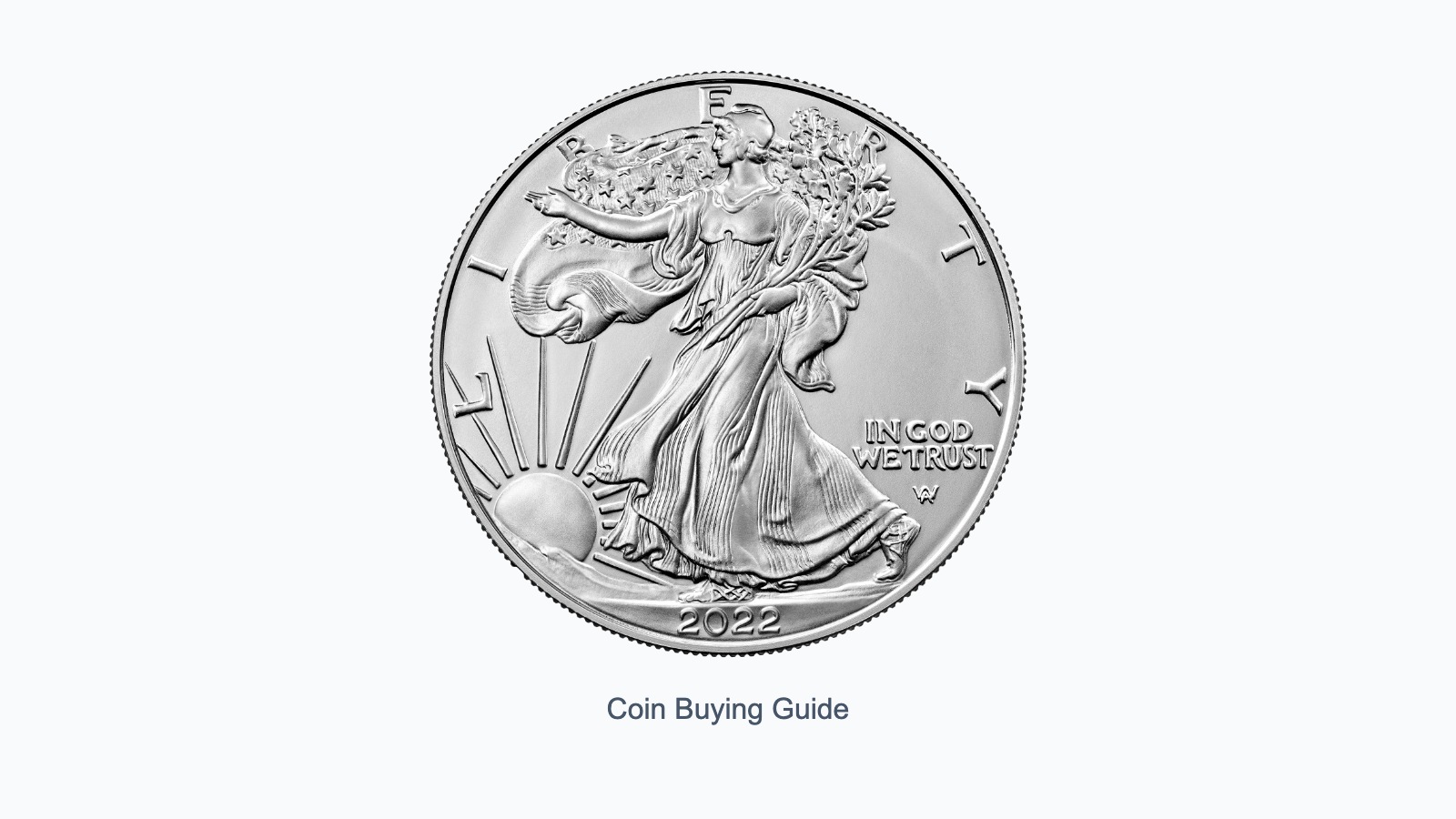
Most people sell coins only a few times in their lives, often after inheriting a collection or deciding to cash out silver bought years ago. Dealers buy coins every day. That gap in experience is where sellers lose money, sometimes accepting a fraction of what a coin is worth because they had no idea what a fair offer looked like.
This guide shows you how dealers set their buy prices, how to calculate the floor value of silver and gold coins yourself, and how to find reputable buyers. It also covers what dealers must report to the IRS, and the specific tactics traveling buyers use to underpay sellers.
The table below compares the main selling channels, from local dealers to auction houses, on price, payment speed, and overall risk to the seller.
| Feature / Metric | Primary Recommended Option | Alternative / Secondary Route | Key Warning or Factor |
|---|---|---|---|
| Source / Platform | Established local coin dealer (PNG or ANA member) | Auction house consignment for rare coins; online bullion buyback programs | Temporary hotel and mail-in buyers carry the highest risk |
| Price vs. Value | Bullion near melt; collectibles below wholesale bid | Auctions can reach full retail, minus seller fees | Retail price guides overstate what any buyer will pay |
| Payment Speed | Same day, often by check or cash | Auction proceeds can take weeks after the sale | Avoid checks from buyers leaving town |
| Risk Level | Low with credentialed dealers | Low to moderate | Unregulated buyers may use pressure or altered scales |
1. Background & Context: What Every Seller Needs to Know
Dealers make money on the spread between what they pay and what they sell for. For U.S. coins, many use the Greysheet, published by the Coin Dealer Newsletter since 1963, as a reference. Its bid price estimates what one dealer would pay another for a problem-free coin graded to PCGS or NGC standards. A dealer buying from the public usually offers below that wholesale level.
The biggest misconception is that retail price guides show what you will be paid. Guide books and online lists generally reflect what collectors pay dealers, not the reverse. If a guide lists a coin at $100, a dealer may offer far less, because the dealer must cover overhead, hold inventory, and still sell below what other dealers charge.
2. Where to Sell: Verified Buyers vs. Risky Channels
Start with local dealers you can verify. The Professional Numismatists Guild runs a "Find a PNG Dealer" directory at pngdealers.org, and PNG members must follow its Code of Ethics, accept binding arbitration for disputes, and pass a background check. The American Numismatic Association's dealer directory at coin-dealer-directory.money.org lets you search by ZIP code and by specialties such as "Appraisals, Buy & Sell."
For rare, certified, or high-value coins, consign to a major numismatic auction house such as Heritage Auctions, Stack's Bowers Galleries, or GreatCollections. Competitive bidding can reach full retail value, though sellers pay a commission and wait weeks for proceeds. Heritage advertises free online appraisals, which is a useful second opinion even if you sell elsewhere.
For common bullion coins, online dealers with posted buyback programs make price comparison easy. JM Bullion and BGASC both run "Sell-To-Us" programs, and APMEX and SD Bullion also buy from the public. You lock in a price, ship the coins insured, and receive payment after inspection, so read each program's shipping and payment terms first.
Coin shows put many dealers in one room, so you can collect several offers in an afternoon. The ANA publishes an events calendar on its dealer directory site, and the PNG lists shows where its members exhibit. Online marketplaces like eBay reach collectors directly, but you handle photos, listing fees, shipping, and any buyer disputes yourself.
Temporary buyers are the riskiest channel. A CBS News investigation of a traveling operation that ran about 120 shows a week under at least eight names found that three of five initial offers were less than a quarter of the gold's value. County consumer agencies in Pennsylvania and New Jersey warned in 2025 about pressure tactics and inaccurate scales.
The table below matches each type of coin to the selling channel that usually suits it best, with a named starting point for each.
| What You Are Selling | Best Channel | Where to Start | Why It Fits |
|---|---|---|---|
| Common silver and gold bullion coins | Local dealer or online buyback | ANA or PNG directory; JM Bullion, APMEX, SD Bullion, BGASC | Priced near melt, easy to compare |
| Rare or certified collectible coins | Auction consignment or specialist dealer | Heritage, Stack's Bowers, GreatCollections | Competitive bidding reaches retail levels |
| Mixed inherited collection | Several local dealers, then auction for standouts | PNG and ANA directories; coin shows | Multiple offers reveal fair value per coin |
| Single coins you can photograph well | Online marketplace | eBay | Direct access to collectors, more work for you |
Before accepting any offer, check the buyer against the three criteria below covering credentials, pricing transparency, and accurate measurement.
- Buyer Credentials and Accountability: Confirm PNG or ANA membership on each organization's website rather than trusting a logo, and check how long the business has operated at its address. Local storefront dealers depend on repeat customers in a way temporary buyers do not.
- Pricing and Premium Over Value: Ask for an itemized written offer showing the price for each coin or lot. Compare bullion offers against current melt value and collectible offers against wholesale references. A buyer who quotes only a single lump sum makes it hard to spot underpayment.
- Accurate Weighing and Testing: Watch the scale while your items are weighed, and confirm it is set to troy ounces or grams. In New Jersey, traveling gold buyers must register with local police and obtain a surety bond with the state's weights and measures office, according to Ocean County officials.
3. How to Sell: Step-by-Step Execution Guide
The six steps below take you from sorting a collection to accepting payment, with checks at each stage to protect your price.
Step 1: Sort your coins by value type. Separate modern circulated coins worth face value, silver and gold coins valued mainly for metal, and potentially collectible coins. Keep coins in their holders, flips, or rolls, and handle them by the edges. Do not clean anything, since cleaning lowers value for collectors and grading services alike.
Step 2: Calculate melt value for metal coins. Multiply each coin's actual silver or gold weight by the current spot price, using the content figures in the table in the next section. Spot prices are published by sources such as Kitco. This gives you the floor below which no reasonable offer should fall for bullion-type coins.
Step 3: Research collectible values. Look up recent auction prices realized for the same coin, date, mint mark, and grade, and compare with retail price guides from PCGS and NGC. For coins that may be worth hundreds of dollars or more, consider professional grading before selling.
Step 4: Get several written offers. Visit at least two or three dealers and ask each for an itemized offer. Do not reveal another dealer's offer until you have each one in writing. If offers vary widely on a particular coin, that coin may deserve an auction consignment or a specialist's opinion.
Step 5: Understand the paperwork. Some states regulate buyers closely; New Jersey, for example, requires buyers to hold purchased items for two business days. For certain bullion sales, dealers file IRS Form 1099-B, and they must file Form 8300 when they receive more than $10,000 in cash, including related transactions within 24 hours. Ask the dealer which forms apply before you finalize the sale.
Step 6: Choose a safe payment method. For large sales, a business check from an established local dealer or a bank transfer is safer than carrying cash. Count cash before leaving, and never accept a personal check from a buyer who is in town only temporarily. Keep the receipt for your tax records.
4. Pricing Drivers: How Dealers Value Your Coins
Silver and gold content sets the floor for many U.S. coins. The table below shows the actual precious metal weight of common U.S. silver coins, which you multiply by the spot price to calculate melt value.
| Coin | Silver Purity | Actual Silver Weight (troy oz) |
|---|---|---|
| Dime (1964 and earlier) | 90% | 0.0723 |
| Quarter (1964 and earlier) | 90% | 0.1808 |
| Half dollar (1964 and earlier) | 90% | 0.3617 |
| Half dollar (1965 to 1970) | 40% | 0.1479 |
| Morgan or Peace dollar | 90% | 0.7734 |
| Wartime nickel (1942 to 1945) | 35% | 0.0563 |
Condition drives value for collectible coins. Grading uses the 70-point Sheldon scale, from Poor-1 to Mint State-70, and small grade differences can change a coin's price dramatically. Certified coins from PCGS or NGC sell more easily because buyers trust the grade, which also makes dealer offers more consistent and easier to compare.
5. Critical Risks, Red Flags, and Scam Avoidance
Sellers lose money through misinformation and pressure far more often than through outright fraud, and the three risk factors below cause most of those losses.
- Risk Factor 1 (Lowball Offers): Without knowing melt value and wholesale benchmarks, sellers often accept offers far below fair value. Paying less is not always illegal, which is why the CBS investigation noted lying about quality is unlawful but simply offering little may not be.
- Risk Factor 2 (Misrepresentation and Altered Scales): Some buyers claim gold is a lower karat or that silver coins are fake. County consumer agencies have warned that unscrupulous buyers may use uninspected or altered scales. Know your coins' weights before you visit, and walk away from anyone who refuses itemized pricing.
- Risk Factor 3 (Pressure and Payment Problems): Limited-time events and "today only" prices push sellers to skip comparison shopping. Some traveling operations have also drawn complaints about bounced checks. Take time to get multiple offers, and prefer payment methods you can verify before handing over your coins.
6. Final Verdict: Who Should Sell Where
Owners of common silver and gold coins should sell to established local dealers or online buyback programs, comparing offers against melt value. These coins trade on metal content, so the main goal is a fair price close to spot, and getting two or three quotes takes little time.
Owners of rare, certified, or high-grade coins should consider auction consignment or a specialist dealer in that series. The extra time and commission can pay off when competitive bidding reaches retail levels. For any coin you suspect is valuable, get an independent opinion before accepting the first offer.
Anyone approached by a temporary hotel buyer, a mail-in buying service, or a door-to-door offer should walk away. Prepare before selling: know what you have, know the melt and wholesale benchmarks, and never let a deadline or urgency replace comparison shopping.
Frequently Asked Questions
The answers below cover the questions sellers most often ask before taking coins to a dealer, from fair pricing to tax reporting.
Sources and Reference Links
The pricing references, dealer standards, reporting rules, and consumer warnings cited in this guide come from the sources listed below.
- Greysheet: About the Coin Dealer Newsletter Wholesale Pricing
- CoinWeek: Precious Metals Reporting Requirements in 2026
- CBS News: Traveling Gold-Buying Operation Generates Complaints Nationwide
- Ocean County, NJ: Consumer Affairs Warning on Gold Buyers
- PNG: Find a PNG Dealer
- ANA Coin Dealer Directory
- Kitco: Precious Metals Spot Prices