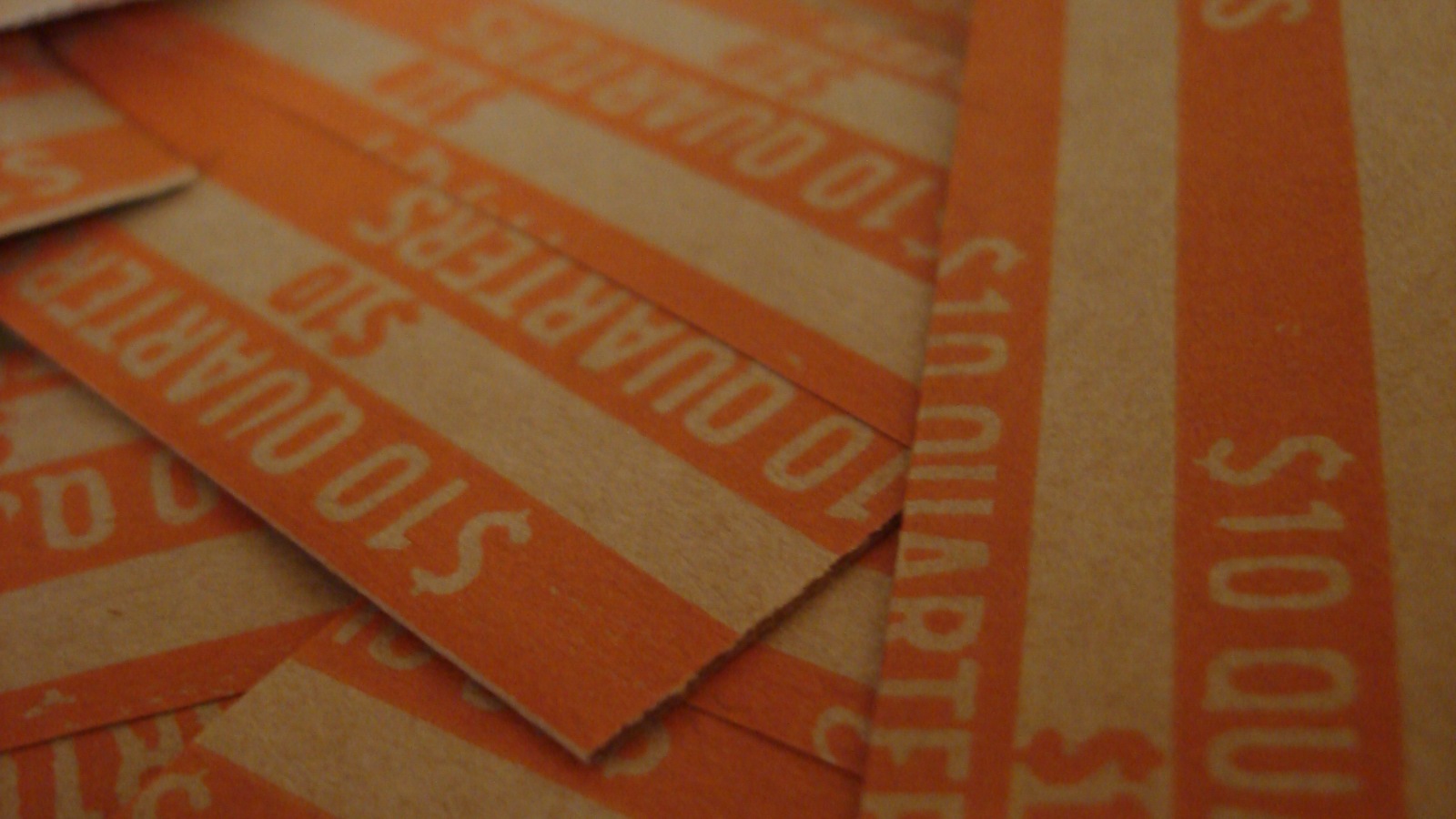
Coin rolls are the cheapest way into coin collecting, and sometimes the most rewarding. A $10 roll of quarters from a bank costs exactly $10, yet it can hold a silver coin, an error, or a scarce date that collectors pay well above face value to own. The same roll from a dealer, labeled "original" or "vault," might cost several times as much.
This guide explains where coin rolls actually come from, how the Federal Reserve, banks, and the U.S. Mint fit together, and how to order full boxes for coin roll hunting. It also covers when paying a premium for Mint or dealer rolls makes sense, and what changed for penny rolls after the Mint stopped striking cents.
The table below compares the three main ways to buy coin rolls, from face-value bank rolls to premium collector products.
| Feature / Metric | Primary Recommended Option | Alternative / Secondary Route | Key Warning or Factor |
|---|---|---|---|
| Source / Platform | Your bank or credit union (rolls and 50-roll boxes) | U.S. Mint collector rolls; coin dealers for older rolls | The Federal Reserve serves only financial institutions |
| Cost / Premium | Face value; some banks charge order fees | Mint quarter two-roll set $56 for $20 face; dealer prices vary | Dealer "vault" labels add cost without proving contents |
| Delivery / Execution Time | Same day for teller stock; days for box orders | Mint orders ship in days to weeks | Fed orders can be partially filled |
| Risk Level | Very low (always worth face value) | Low to moderate | Premiums can exceed any realistic find value |
1. Background & Context: What Every Buyer Needs to Know
Coin moves through a fixed chain. The U.S. Mint strikes circulating coins and ships them to the Federal Reserve, which supplies banks and credit unions through its FedCash services. Banks then sell coin to businesses and customers. When customers and businesses deposit coin, it flows back up the chain, often rewrapped by armored carriers or the bank itself.
Each denomination has a standard roll size, and a standard box holds 50 rolls. Knowing these numbers lets you order the right quantity and spot short or tampered rolls. A roll that feels light or loose has often been opened, searched, and rewrapped with replacement coins.
The table below shows the standard roll and box sizes for each circulating denomination, so you can order the right quantity and spot short rolls.
| Denomination | Coins per Roll | Face Value per Roll | 50-Roll Box Value |
|---|---|---|---|
| Cent | 50 | $0.50 | $25 |
| Nickel | 40 | $2.00 | $100 |
| Dime | 50 | $5.00 | $250 |
| Quarter | 40 | $10.00 | $500 |
| Half dollar | 20 | $10.00 | $500 |
A common misconception is that individuals can order directly from the Federal Reserve. They cannot. The Fed's coin ordering standards are written for depository institutions, which order in bulk units such as $1,000 bags of quarters and $200 bags of nickels. The Fed also states it may partially fill orders to protect its inventory, which is why some boxes take longer to arrive.
Cent rolls are now a special case. The Mint struck its final penny in Philadelphia on November 12, 2025, ending more than 230 years of production. The Independent Community Bankers of America reported that the Fed continues to accept penny deposits but will limit penny orders as inventories shrink. Expect cent boxes to become harder to obtain over time.
2. Where to Buy: Verified Sources vs. Risky Channels
Banks and credit unions are the primary source for face-value rolls. Tellers usually keep a supply of common denominations, and many branches will order full boxes from their coin supplier if you ask a few days ahead. Policies vary: some limit coin service to account holders, and some charge fees for special orders.
The U.S. Mint is the primary source for collector rolls of new designs. In 2026, it sells circulating-quality Semiquincentennial quarters in two-roll sets with one Philadelphia and one Denver roll, plus 100-coin bags. The Mint priced its Declaration of Independence and Revolutionary War quarter two-roll sets at $56 and bags at $63, and its Emerging Liberty dime two-roll set at $40.
Coin dealers sell older rolls, including original bank-wrapped (OBW) rolls from past decades. These can be legitimate, but terms like "vault reserve" or "hoard" describe how a seller markets a roll, not its contents. Avoid paying premiums for unsearched claims on rolls you cannot inspect, and be wary of sellers who will not allow returns.
Before choosing a bank, the Mint, or a dealer, check the source against the three criteria below covering availability, pricing, and protection from tampering.
- Primary Source Availability: Banks can order most denominations, but penny supply is shrinking and half dollars or dollar coins may require special requests. Mint collector rolls carry release dates and household limits, such as the two-per-household limit on its Gettysburg Address quarter rolls.
- Pricing and Premium Over Value: Bank rolls cost face value, so you can always spend or redeposit them at no loss beyond any fees. Mint quarter two-roll sets cost $56 for $20 in face value, a premium you pay for fresh, uncirculated-quality coins.
- Counterfeit Protection: Bank and armored-carrier wraps are hard to tamper with invisibly. For dealer rolls, check weight against the standard (40 quarters weigh about 226.8 grams), look for crimped ends that appear rerolled, and buy only with a return policy.
3. How to Buy: Step-by-Step Execution Guide
The steps below cover ordering face-value boxes from a bank, buying collector rolls from the Mint, and checking dealer rolls before you pay.
Step 1: Choose the right bank or credit union. Ask at the teller window whether the branch orders coin boxes for customers and whether it charges a fee. Community banks and credit unions are often more flexible than large branches. Opening a basic account can make ordering easier, since some institutions reserve coin services for members.
Step 2: Place a box order in advance. Specify the denomination and quantity, such as one box of dimes. Give the branch several business days, since the Fed's basic service level is one coin order per week for each bank location. Ask whether boxes will arrive in carrier wrapping or as customer-wrapped rolls, since the latter often contain older coins.
Step 3: Pay and inspect at pickup. Pay face value plus any stated fee, and count the rolls before leaving. A standard box should hold 50 rolls. Carry boxes carefully: a full $500 box of quarters weighs roughly 25 pounds, so plan transport before you collect it.
Step 4: Search, then return what you do not keep. After sorting the coins, rewrap the rest in fresh paper wrappers. Many banks accept customer-wrapped rolls marked with your name and account number. Some require coin to go through a counting machine or charge counting fees, so confirm the deposit policy first.
Step 5: Buy Mint collector rolls on release day. Create a USMint.gov account, save your payment and shipping details, and sign up for product alerts. New roll products go on sale at announced times, usually noon ET. The Mint notes it cannot guarantee whether a coin's obverse or reverse faces either end of a roll.
Step 6: Vet dealer rolls before paying. Ask for photos of both roll ends, the exact weight, and the seller's return terms. Compare the price against face value and against the realistic value of what the roll might contain. If the premium exceeds any plausible find, the purchase is a collectible, not a search opportunity.
4. Pricing Drivers: What Makes a Roll Worth More Than Face
Silver content is the most reliable source of value in modern rolls. Dimes, quarters, and half dollars dated 1964 and earlier contain 90% silver, half dollars from 1965 to 1970 contain 40% silver, and wartime nickels from 1942 to 1945 contain 35% silver. These coins still surface in customer-wrapped rolls, especially half dollars.
Errors and varieties add a second layer. Doubled dies, off-center strikes, and missing-mint-mark coins can sell well above face value, but they are rare, and most require magnification and reference guides to identify. Grading services can confirm a find, though grading fees make sense only for coins worth substantially more than the cost.
New designs drive Mint roll demand. The 2026 Semiquincentennial program changes the designs of most circulating coins for one year, which raises collector interest in fresh rolls from both Philadelphia and Denver. Paying the Mint's premium gets you coins straight from production, while bank rolls of the same designs cost face value but may be circulated.
Scarcity can shift over time. With penny production ended, older cent rolls may gain collector interest, particularly sealed rolls of the final 2025 issues. That is a reason to hold onto interesting finds, not a guarantee that bulk cents will rise in value.
5. Critical Risks, Red Flags, and Scam Avoidance
Coin roll buying carries little downside at face value, which is why most losses come from paying premiums above it. The risks below are the ones that most often cost buyers money or time, especially with dealer and collector rolls.
The three risk factors below deserve the most attention before you spend more than face value on any roll.
- Risk Factor 1 (Overpayment & Premiums): Dealer rolls marketed as "unsearched," "vault," or "original" can cost many times face value. Unless the roll is a documented original from a specific era and you can verify the wrapping, the premium often exceeds the expected value of its contents.
- Risk Factor 2 (Authenticity & Fakes): Rerolled wrappers can hide replaced coins, and resealed shotgun rolls can show desirable coins on the ends while the middle is filled with common dates. Weigh rolls, inspect the crimps, and buy from sellers who accept returns.
- Risk Factor 3 (Liquidity & Resale Friction): Collector premiums do not transfer automatically. A Mint two-roll set bought for $56 may resell for less once the design is widely available in circulation, while bank rolls always keep their face value.
6. Final Verdict: Who Should Buy and Who Should Walk Away
Bank rolls and boxes suit coin roll hunters, beginners, and anyone who wants to learn coins without risking money. Since every roll is worth face value, the only real costs are time and any bank fees. Half dollar and customer-wrapped boxes offer the best odds of finding silver.
Mint collector rolls suit collectors who want fresh coins of new designs from both mints, especially during the 2026 Semiquincentennial program. Dealer rolls make sense only for experienced collectors who can verify original wrapping and know what a given roll should contain.
Anyone buying rolls hoping for quick profit at a premium should walk away. Start at your bank with face-value boxes, learn which dates and varieties matter, and pay premiums only when you know exactly what you are getting and why it is worth more.
Frequently Asked Questions
The answers below cover the questions buyers most often ask about buying coin rolls, from bank policies to Mint products.
Sources and Reference Links
The roll standards, Mint prices, and penny production details in this guide come from the official sources and reports listed below.
- Federal Reserve FedCash Services: Coin Depositing and Ordering
- ICBA: End of Penny Production Guidance for Banks
- Federal Register: 2026 U.S. Mint Dime Roll and Bag Pricing
- CoinNews: U.S. Mint Offers Revolutionary War Quarter Rolls and Bags
- U.S. Mint: Semiquincentennial Quarters 2026 Rolls and Bags, Gettysburg Address
- U.S. Mint: Semiquincentennial Quarters 2026 Rolls and Bags, U.S. Constitution