
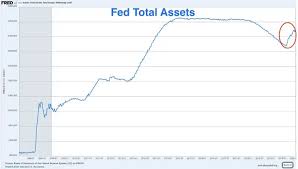
When crypto markets rise or fall sharply, many investors focus on project news, token launches, or on-chain activity. While these factors certainly matter, some of the biggest forces affecting digital asset prices originate outside the crypto industry entirely. One of the most influential is Federal Reserve monetary policy, particularly a process known as quantitative tightening, or QT.
Quantitative tightening reduces liquidity across the financial system by shrinking the Federal Reserve's balance sheet. Less liquidity generally means less money available for speculative investments, and risk-on assets such as cryptocurrencies often feel the impact first. Understanding how QT affects Bitcoin, Ethereum, DeFi protocols, stablecoins, and emerging Web3 projects can help investors make more informed decisions during challenging market conditions.
What Is Quantitative Tightening?
Quantitative tightening is the process through which the Federal Reserve reduces the size of its balance sheet. During periods of quantitative easing, the Fed purchases government bonds and other financial assets to inject liquidity into the economy. Quantitative tightening works in the opposite direction by allowing those assets to mature without replacement or by actively reducing holdings.
As money is removed from the financial system, borrowing becomes more expensive and financial conditions tighten. Investors who previously had access to abundant capital suddenly find liquidity harder to obtain. This often changes investment behaviour across multiple asset classes, including stocks, commodities, and digital assets.
For crypto investors, QT matters because cryptocurrencies are generally considered risk-on assets. When liquidity declines, investors often reduce exposure to speculative investments and shift capital toward safer alternatives. This dynamic can place significant pressure on digital asset prices.
Why Liquidity Matters for Crypto Markets
Liquidity is one of the most important drivers of digital asset performance. During periods of abundant liquidity, investors tend to take more risks, allocate more capital to emerging technologies, and participate more aggressively in speculative markets.
Crypto markets have historically performed well when liquidity is expanding. Easy access to capital encourages investors to buy Bitcoin, fund startup projects, participate in DeFi protocols, and speculate on smaller altcoins. These activities create demand that supports higher valuations across the ecosystem.
When quantitative tightening removes liquidity, the opposite often occurs. Investors become more cautious, leverage declines, and funding for speculative ventures becomes harder to obtain. This reduced appetite for risk can trigger significant price declines, particularly among smaller and less established digital assets.
How QT Influences Bitcoin and Ethereum
Bitcoin and Ethereum are often the first digital assets investors examine when evaluating the impact of Federal Reserve policy. While both are fundamentally different from traditional financial assets, they still respond to broader macroeconomic conditions.
During periods of tightening, institutional investors frequently reduce exposure to risk assets across the board. Because Bitcoin and Ethereum are among the largest and most liquid cryptocurrencies, they often become the primary vehicles through which investors adjust crypto exposure.
This doesn't necessarily mean they perform poorly relative to the rest of the market. In many cases, Bitcoin and Ethereum demonstrate greater resilience than smaller tokens because investors view them as safer options within the crypto ecosystem. Even so, reduced liquidity can still suppress growth and limit upside potential.
The Impact on DeFi Lending Markets
Decentralized finance relies heavily on capital flows. Lending protocols, liquidity pools, and yield-generating platforms all depend on users supplying assets in exchange for returns. When liquidity conditions tighten, these systems can experience significant changes.
Higher interest rates in traditional finance often create direct competition for DeFi yields. If investors can earn attractive returns from government bonds or high-yield savings products, the incentive to lock capital into DeFi protocols decreases. As a result, total value locked across the sector may decline.
Protocols such as Aave, Compound, and other lending platforms frequently experience lower borrowing demand during QT periods. This reduced activity can place downward pressure on yields and make it more difficult for protocols to attract new users and liquidity providers.
READ ALSO
Why Web3 Startups Feel the Pressure
Early-stage Web3 projects are often among the most vulnerable segments of the digital asset market during quantitative tightening. These projects typically rely on venture capital funding, private investors, and community participation to finance development and growth.
When liquidity becomes scarce, investors become more selective. Rather than funding speculative ideas, they tend to focus on projects with proven business models, clear utility, and realistic paths toward revenue generation. This shift can create significant challenges for startups seeking capital.
As a result, token launches, presales, and fundraising rounds may become less successful during tightening cycles. Projects that fail to demonstrate strong fundamentals often struggle to attract the investment necessary to sustain long-term development.
Quantitative Tightening and Token Presales
Token presales thrive when investors are willing to take risks. During bullish periods with abundant liquidity, many participants are comfortable allocating capital to early-stage projects in the hope of significant future returns.
Quantitative tightening changes that environment considerably. Investors become more cautious and focus more heavily on risk management. Instead of spreading capital across numerous speculative opportunities, they often concentrate on a smaller number of projects with stronger fundamentals.
Projects operating in sectors such as decentralized physical infrastructure networks (DePIN), artificial intelligence, and blockchain infrastructure may continue attracting attention. However, even these sectors typically face higher standards of scrutiny during periods of reduced liquidity.
Effects on On-Chain Derivatives Platforms
On-chain derivatives platforms depend heavily on active participation from traders. High trading volume, leverage usage, and open interest contribute significantly to the health of these ecosystems.
During quantitative tightening, trading behaviour often changes. Many investors reduce leverage and become less willing to take aggressive directional positions. This can lead to lower trading volume and reduced activity across perpetual futures markets.
Platforms that rely on high levels of speculation may experience slower growth as traders focus more on risk management than profit maximization. Although activity does not disappear entirely, the overall environment often becomes more defensive.
READ ALSO
- How to Use Flash Accounting Features to Minimize Overall Smart Contract Execution Gas Overhead
- How to Hedge Your Position Value While Waiting for Multi-Signature Bridge Transactions to Clear
- How do cross-chain aggregators calculate the most cost-efficient route for massive spot swaps?
- How to Calculate Uniswap V3 Impermanent Loss Risk (2026 Guide)
Solana, Congestion, and Volatility During QT
Periods of tightening can increase market volatility, particularly during major macroeconomic announcements or sudden shifts in investor sentiment. These periods often lead to rapid position adjustments and increased transaction activity across blockchain networks.
On Solana, heightened trading activity can increase demand for block space. Traders rushing to enter or exit positions may compete for faster transaction processing, causing priority fees to rise. This creates additional costs for users seeking immediate execution.
The relationship between macroeconomic policy and blockchain activity may not always be obvious, but the effects become visible during periods of market stress. Increased volatility often translates into greater competition for network resources and faster transaction processing.
Investment Strategies During Quantitative Tightening
Investors cannot control Federal Reserve policy, but they can adjust their portfolios to reflect changing market conditions. A disciplined approach becomes increasingly important when liquidity is being removed from the financial system.
Some strategies commonly used during QT include:
- Prioritising capital preservation
- Maintaining larger stablecoin allocations
- Focusing on high-quality projects
- Reducing leverage exposure
- Monitoring macroeconomic developments
These approaches help investors manage risk while remaining positioned for future opportunities. The goal is not necessarily to avoid all volatility but to navigate it more effectively.
Successful investing during tightening cycles often requires patience. Markets may remain under pressure for extended periods before liquidity conditions begin improving again.
How to Identify Stronger Digital Assets
Not all cryptocurrencies respond to QT in the same way. Some projects are more resilient because they have stronger ecosystems, higher adoption levels, or clearer utility than others.
Investors looking for resilience often focus on:
- Established networks
- Strong developer activity
- Consistent user growth
- Sustainable revenue models
- Real-world use cases
Projects that demonstrate genuine utility tend to attract more long-term support than purely speculative assets. While they are not immune to market downturns, they often recover more effectively when conditions improve.
Evaluating fundamentals becomes especially important when liquidity is limited because investors have fewer resources available to support weaker projects.
The Importance of Portfolio Rebalancing
Market conditions can change rapidly during periods of quantitative tightening. Assets that once represented a reasonable allocation may become disproportionately risky as volatility increases and liquidity declines.
Portfolio rebalancing helps investors maintain appropriate risk exposure. By periodically reviewing asset allocations, investors can ensure that their portfolios remain aligned with their objectives despite changing market conditions.
This process may involve reducing exposure to highly speculative assets and increasing allocations to more defensive positions. The objective is not to eliminate risk entirely but to maintain a balance that reflects current market realities.
Consistent rebalancing can also help investors avoid emotional decision-making during periods of heightened uncertainty.
Why Monitoring On-Chain Metrics Matters
While macroeconomic policy provides valuable context, on-chain data offers insight into how participants are actually behaving. Monitoring these metrics can help investors identify shifts in sentiment before they become obvious in price action.
Useful metrics include:
- Stablecoin inflows and outflows
- Exchange balances
- DeFi total value locked
- Active wallet addresses
- Lending protocol activity
These indicators help investors understand where liquidity is moving and how market participants are responding to changing conditions. Combined with macroeconomic analysis, they provide a more complete picture of the market environment.
The strongest investment decisions often come from combining multiple sources of information rather than relying on a single indicator.
Conclusion
Federal Reserve quantitative tightening creates a challenging environment for risk-on digital assets because it reduces liquidity, increases borrowing costs, and encourages investors to become more selective. These effects ripple throughout the crypto ecosystem, influencing everything from Bitcoin and Ethereum to DeFi lending, token presales, and on-chain derivatives platforms.
While tightening cycles can create short-term pressure, they also highlight the importance of strong fundamentals and disciplined investing. By understanding how liquidity affects digital assets, monitoring key market indicators, and maintaining a well-structured portfolio, investors can navigate periods of QT more effectively. The ability to adapt to changing macroeconomic conditions remains one of the most valuable skills in today's evolving crypto landscape.