
If you've spent any time trading on decentralized exchanges, you've probably experienced a trade that executed at a worse price than expected. You enter a swap, approve the transaction, and by the time it settles, the amount you receive is noticeably lower. In many cases, this isn't simply market volatility at work. It may be the result of a sandwich attack, one of the most common forms of Maximal Extractable Value (MEV) exploitation in DeFi.
As blockchain ecosystems continue to evolve in 2026, sandwich attacks remain a major concern for traders on networks such as Ethereum, Solana, and Base. Fortunately, decentralized limit order protocols now provide a practical defense against these attacks. By understanding how these systems work and when to use them, you can reduce slippage, improve execution quality, and protect your capital from predatory bots.
What Is a Sandwich Attack?
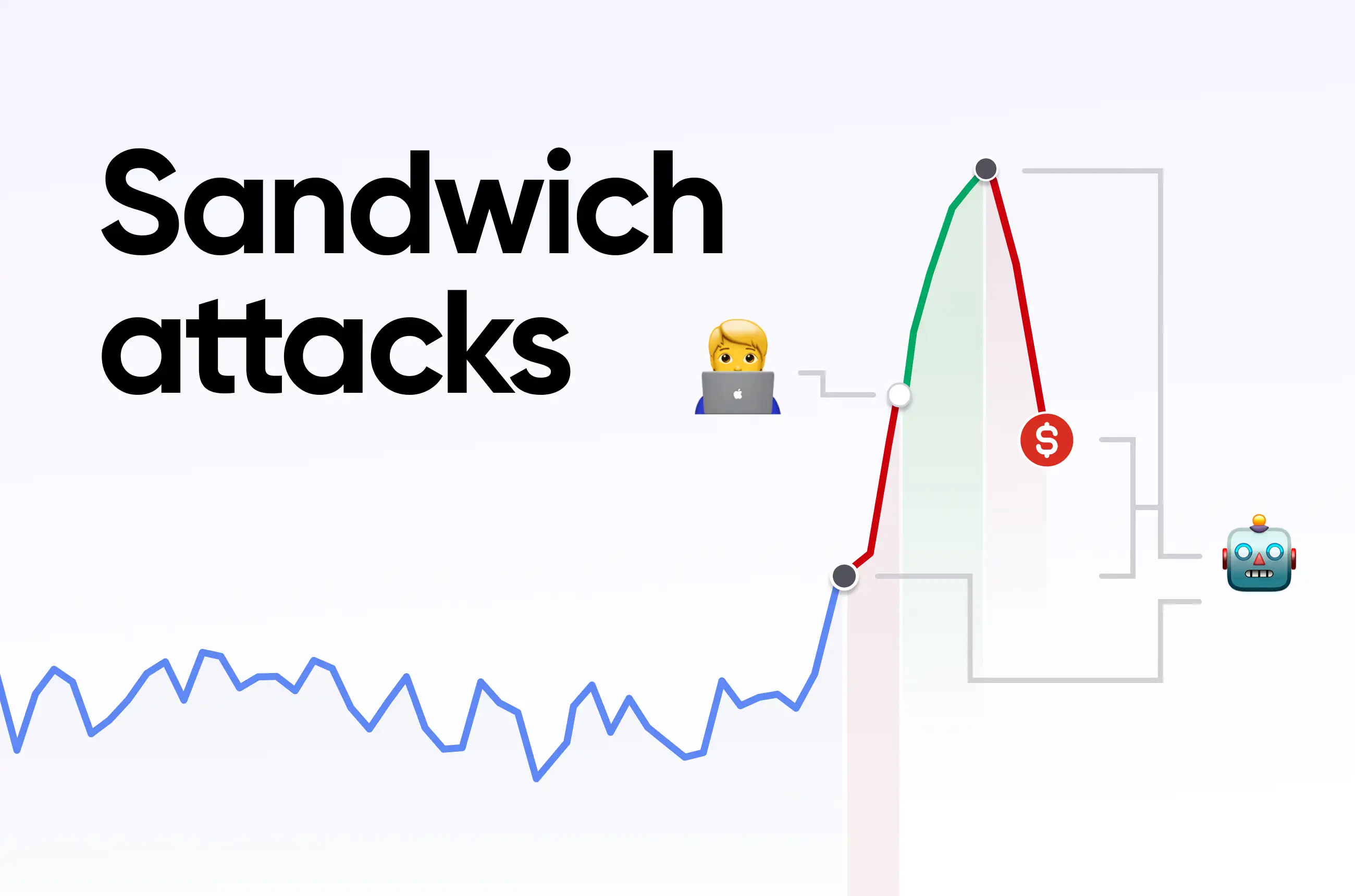
A sandwich attack occurs when automated bots detect your pending transaction and place their own transactions around it. The attacker buys an asset before your transaction executes and then sells immediately after your trade pushes the price higher. The difference becomes profit for the attacker, while you receive a worse execution price.
This process happens incredibly quickly. Most traders never realize they've been targeted because everything occurs within a single block. From the user's perspective, it simply looks like unexpected slippage or a poor swap rate. Behind the scenes, however, sophisticated bots are constantly scanning public mempools for profitable opportunities.
The growth of automated trading infrastructure has made these attacks more efficient than ever. Advanced bots can react within milliseconds, giving ordinary traders little chance of competing on speed alone.
Why Sandwich Attacks Remain a Problem in 2026
Many people assumed that improvements in blockchain infrastructure would eventually eliminate sandwich attacks. While networks have become faster and more efficient, attackers have evolved alongside them. Better execution systems and improved transaction prioritization have actually created new opportunities for sophisticated MEV operators.
On chains such as Solana, advanced transaction routing systems and validator incentives allow bots to compete aggressively for block inclusion. On Ethereum and Layer 2 networks, specialized builders and searchers continue to optimize strategies designed to extract value from unsuspecting users.
The result is an environment where large swaps remain attractive targets. The bigger the transaction, the more likely it is to create price movement that a bot can exploit. This is why active traders and liquidity providers pay close attention to execution quality.
How a Typical Sandwich Attack Works
To understand why decentralized limit orders matter, it helps to understand the mechanics of a sandwich attack. The process is surprisingly simple once you break it down.
Imagine you want to swap a large amount of SOL for USDC. Your transaction enters the public mempool, where pending transactions can be observed before confirmation. An MEV bot notices that your order is large enough to move the market.
The bot immediately buys SOL before your transaction executes. Because your order increases demand, the price rises after your swap goes through. The bot then sells the SOL it just purchased at the higher price, locking in a profit while you receive fewer tokens than expected.
Although the attack may only affect your execution by a small percentage, these costs add up over time. Frequent traders can lose substantial amounts of money without ever realizing why their swaps consistently underperform expectations.
Why Public Mempools Create Vulnerabilities
The public mempool is one of the primary reasons sandwich attacks exist. Before transactions are included in a block, they sit in a waiting area where they can be viewed by anyone monitoring the network.
This transparency is valuable for decentralization, but it also creates opportunities for exploitation. Bots continuously scan pending transactions looking for trades that can be front-run or manipulated. Once a profitable opportunity appears, they act immediately.
For ordinary users, competing against this infrastructure is virtually impossible. Human reaction times cannot match automated systems operating around the clock. This is why alternative execution methods have become increasingly important for serious DeFi participants.
READ ALSO
What Are Decentralized Limit Orders?
Decentralized limit orders provide an alternative way to execute trades without immediately exposing your intentions to public mempool observers. Instead of broadcasting a market order that executes at the current price, you specify the exact price at which you're willing to buy or sell an asset.
The order remains inactive until market conditions reach your target level. Because execution often occurs through specialized infrastructure rather than public mempool exposure, opportunities for sandwich attacks are significantly reduced.
This approach gives traders more control over execution quality. Rather than accepting whatever price the market offers at that moment, you establish clear parameters for when a trade should occur.
How Decentralized Limit Orders Reduce MEV Risk
The primary advantage of decentralized limit orders is privacy. Many modern protocols keep order details hidden until execution, preventing bots from identifying opportunities in advance.
Instead of exposing your transaction to every participant monitoring the mempool, the order may be routed through private relayers, specialized solvers, or off-chain matching systems. By the time the trade reaches the blockchain, it is often bundled and executed in a way that minimizes front-running opportunities.
This dramatically changes the risk profile of the trade. Since bots cannot easily observe and react to your intentions beforehand, the likelihood of being sandwiched decreases substantially.
The Role of Solvers and Private Order Flow
Many leading limit order protocols rely on networks of solvers. These entities compete to execute orders at the best available price while minimizing execution costs for users.
Rather than submitting transactions directly to the public mempool, orders are often processed through private channels. Solvers search across multiple liquidity sources, identify optimal routes, and execute trades in a way that protects users from common forms of MEV extraction.
This creates a better overall trading experience. Instead of competing against bots, users benefit from infrastructure specifically designed to improve execution quality and preserve value.
READ ALSO
- How to Use Flash Accounting Features to Minimize Overall Smart Contract Execution Gas Overhead
- How to Hedge Your Position Value While Waiting for Multi-Signature Bridge Transactions to Clear
- How do cross-chain aggregators calculate the most cost-efficient route for massive spot swaps?
- How to Calculate Uniswap V3 Impermanent Loss Risk (2026 Guide)
Leading Decentralized Limit Order Protocols in 2026
Several protocols have emerged as leaders in the decentralized limit order space. Each takes a slightly different approach to execution and MEV protection, but all aim to provide better outcomes than traditional market swaps.
Some of the most widely used options include:
- CoW Swap
- Uniswap V4 limit order implementations
- Matcha via 0x Protocol
- Specialized order-routing aggregators
- Private relay execution platforms
These protocols continue to evolve as competition increases. Improvements in execution quality, gas efficiency, and user experience have made decentralized limit orders increasingly accessible to everyday traders.
The best option often depends on the assets being traded and the blockchain network being used.
Why CoW Swap Remains Popular
CoW Swap has become one of the most recognized names in MEV-protected trading. Instead of immediately executing orders against liquidity pools, it batches transactions and uses competing solvers to determine the best execution path.
This batching process creates natural protection against sandwich attacks. Since orders are grouped together and settled collectively, it becomes much harder for attackers to isolate and exploit individual trades.
Many traders appreciate CoW Swap because it combines strong MEV protection with a relatively simple user experience. The platform allows users to access advanced execution methods without requiring deep technical knowledge.
Limit Orders vs Market Orders
Many traders default to market orders because they offer immediate execution. However, this convenience often comes at the cost of poorer pricing and increased exposure to MEV attacks.
Limit orders provide greater control by allowing traders to define their desired entry or exit price. This removes much of the uncertainty associated with market execution and can significantly improve long-term results.
The trade-off is that limit orders may not fill immediately. If the market never reaches your specified price, the order remains unexecuted. For many traders, however, this is a worthwhile compromise in exchange for improved pricing and greater protection.
Additional Benefits Beyond MEV Protection
While protection against sandwich attacks is a major advantage, decentralized limit orders offer several additional benefits.
These include:
- Better price control
- Reduced slippage
- Automated execution
- Improved capital efficiency
- Less emotional decision-making
Many traders find that these advantages improve overall trading performance. Instead of reacting impulsively to market movements, they can plan entries and exits more strategically.
Over time, this disciplined approach often produces better outcomes than constantly chasing short-term price action.
Are There Any Drawbacks?
No trading solution is perfect, and decentralized limit orders have limitations. The most obvious drawback is that orders may never execute if the market fails to reach the specified price.
Liquidity can also vary between platforms. Some protocols have deeper liquidity than others, which can affect execution quality for larger trades. Additionally, new users may find certain interfaces more complex than traditional decentralized exchanges.
Despite these limitations, many traders consider the benefits to outweigh the drawbacks. The ability to avoid MEV exploitation alone often justifies the additional effort required to use limit order systems.
Best Practices for Using Decentralized Limit Orders
To get the most from decentralized limit orders, it's important to approach them strategically. Simply placing orders without understanding market conditions can limit their effectiveness.
Consider the following practices:
- Use realistic price targets
- Monitor liquidity conditions
- Compare execution platforms
- Review protocol fees
- Avoid overly aggressive entries
These habits improve the likelihood of successful execution while maintaining the protective benefits that limit orders provide.
A thoughtful approach generally produces better results than treating limit orders as a set-and-forget solution.
Conclusion
Sandwich attacks remain one of the most persistent threats facing DeFi traders in 2026. As trading infrastructure becomes more sophisticated, attackers continue finding new ways to exploit public transaction visibility and extract value from unsuspecting users.
Decentralized limit order protocols offer one of the most effective defenses available today. By reducing transaction visibility, improving execution quality, and giving traders greater control over pricing, these systems help protect users from common forms of MEV exploitation. Whether you're trading on Ethereum, Solana, Base, or another major blockchain, incorporating decentralized limit orders into your strategy can be a powerful step toward safer and more efficient trading.