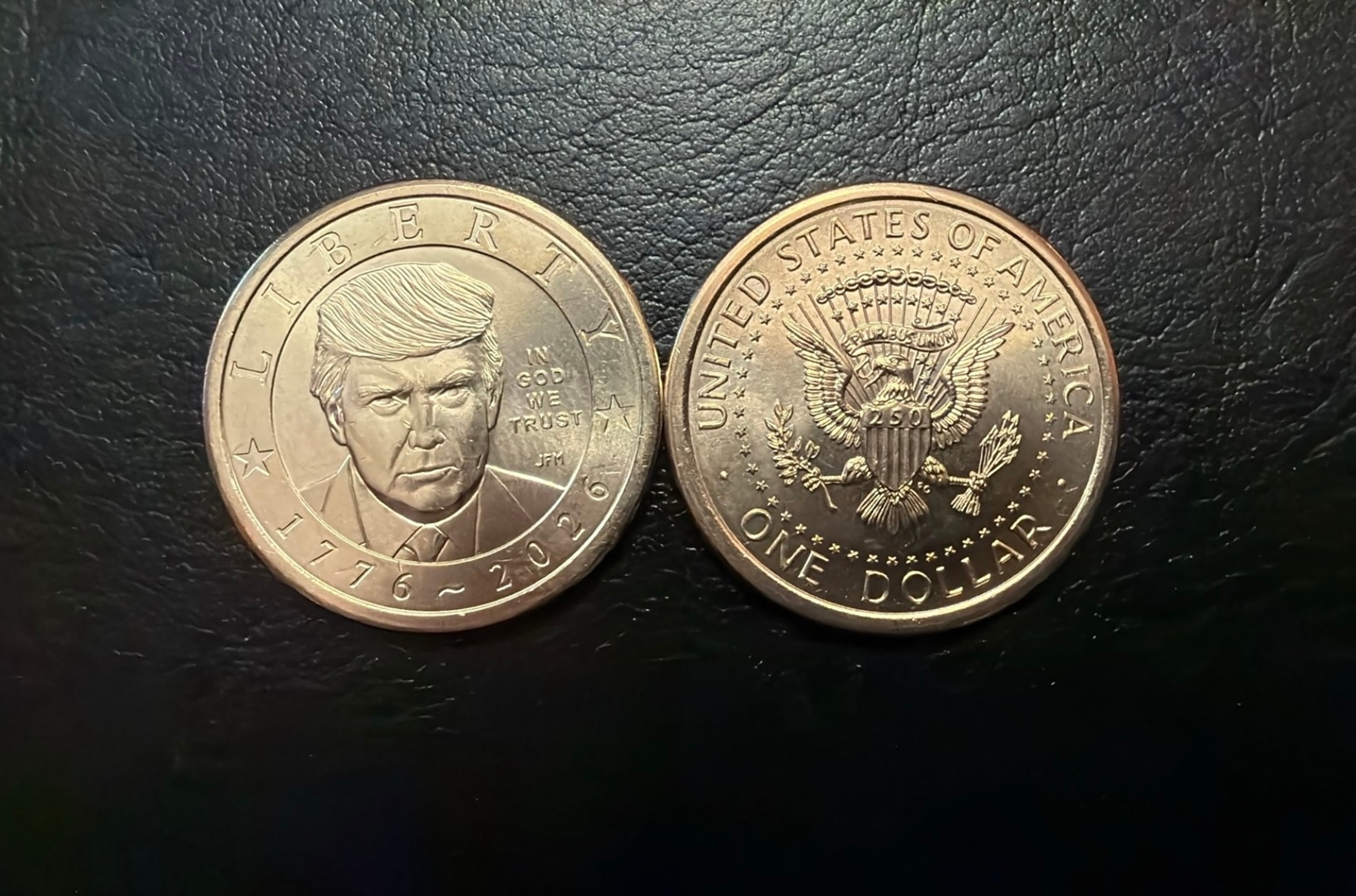
On September 2, 2026, the U.S. Mint put its first Trump dollar coins on sale at noon Eastern. Within half an hour, buyers were sitting in a virtual waiting room, and by mid-afternoon both the 25-coin rolls and the 100-coin bags were gone. Thousands of collectors who wanted one at the official price missed out.
This guide covers what you can still buy, where, and at what price. It walks through the Mint's ordering system, the secondary market where most coins now change hands, and the upcoming 24-karat gold version going on sale November 5, so you can buy at a fair price instead of paying a reseller's markup.
The table below compares buying directly from the U.S. Mint with buying on the secondary market, covering cost, delivery time, and the main risks of each route.
| Feature / Metric | Primary Recommended Option | Alternative / Secondary Route | Key Warning or Factor |
|---|---|---|---|
| Source / Platform | USMint.gov (restock alerts, plus 26SQG gold coin on Nov. 5) | Established coin dealers and certified-coin marketplaces | Rolls and bags are not currently for sale at the Mint |
| Cost / Premium | $2.44 per coin in rolls, $1.545 in bags | Varies widely; one retailer listed a roll at $144.95 | Face value is only $1 per coin |
| Delivery / Execution Time | Days to weeks; backorders ship as stock arrives | Usually days from in-stock dealers | Insured shipping adds cost on secondary orders |
| Risk Level | Low (official source) | Moderate (resealed rolls, inflated prices) | Privy-mark coins are randomly packed, never guaranteed |
1. Background & Context: What Every Buyer Needs to Know
The coin is officially the 2026 Semiquincentennial President Donald J. Trump $1 Coin. It was authorized under the Circulating Collectible Coin Redesign Act of 2020, which allows a new dollar design for one year starting January 1, 2026, to mark the nation's 250th anniversary. The obverse shows President Trump with "1776 ~ 2026," and the reverse carries the Presidential Seal with "250" on the shield.
Each coin weighs 8.1 grams, measures 26.49 mm, and is copper alloyed with zinc, manganese, and nickel, which gives it a gold color without any gold content. Every roll-and-bag coin was struck at Philadelphia with a plain edge and no mint mark. Dealers often list it as "2026-P," which refers to where it was struck, not a visible letter on the coin.
The September 2 launch shows how fast demand moved. CNN reported, as cited by Western Journal, that buyers entered a waiting room by 12:30 p.m., then had 10 minutes to check out once admitted. The Hill reported rolls showed "currently on backorder" and bags "currently unavailable" that afternoon. The product page now lists both as "Not Available."
A key point for buyers: the coins in collector rolls and bags have never been placed into circulation, according to the Mint's product page. Separately, the Mint's Trump coin page says the $1 coin will be released into circulation in fall 2026. If that happens, some coins may eventually appear through banks at face value, though the timing and quantity have not been specified.
2. Where to Buy: Verified Sources vs. Risky Channels
The only official source is USMint.gov, where rolls and bags carried product limits of 150,000 and 50,000 units. The listing shows no overall mintage limit, so the Mint is not barred from offering more. Signing up for "Remind Me" alerts on the product page is the only way to hear about a restock first. The Mint's phone line is (800) USA-MINT.
Most buyers now turn to established coin dealers and certified-coin marketplaces. SD Bullion, for example, lists 25-coin tubes and single coins, plus coins graded by NGC with "First Day of Issue" labels. Compare any dealer price against the Mint's $61 roll and $154.50 bag prices, and check completed sales on auction sites rather than active asking prices.
Treat any listing that calls a private product "official" with suspicion. Private companies sell colorized, gold-plated, or novelty Trump coins that look similar but are not U.S. Mint products and have no legal tender status. Also avoid sellers offering "presale" access to Mint products or guaranteed privy-mark rolls, since the Mint packed those coins randomly.
Before buying from any seller, official or secondary, check the offer against the three criteria below to confirm availability, fair pricing, and authenticity.
- Primary Source Availability: The Mint's rolls and bags are not available now, with no announced restock date. The 26SQG gold proof coin goes on sale November 5, 2026, at noon ET, with a 75,000-coin mintage limit and a limit of one per household.
- Pricing and Premium Over Value: The Mint charged $2.44 per coin in rolls and $1.545 per coin in bags, against a $1 face value. Any secondary price above those levels is a premium you would need a future buyer to pay back.
- Counterfeit Protection: Genuine coins weigh 8.1 grams, measure 26.49 mm, and have a plain edge and no mint mark. Certified coins should sit in an NGC or PCGS holder whose number you can verify on the grading service's website.
3. How to Buy: Step-by-Step Execution Guide
The six steps below walk you through buying from the Mint on release day, handling backorders, and checking a secondary seller before you pay.
Step 1: Create a Mint account in advance. Register at USMint.gov well before any release, and save your shipping address and payment card in your profile. On September 2, buyers had only 10 minutes to check out after leaving the waiting room. Entering details during that window costs time you may not have.
Step 2: Set up alerts. Click "Remind Me" on the rolls-and-bags page and on the 26SQG gold coin page, and choose email or text alerts. Restock notices and release reminders go to subscribers first. Follow the Mint's official social media accounts as a backup, since product updates are also posted there.
Step 3: Know the household limits. The Mint applies household order limits to give more buyers a chance. The September 2 launch allowed two per household for the first 24 hours, and the Mint says limits are typically lifted at 2 p.m. ET the business day after a release. The gold proof coin is limited to one per household.
Step 4: Join the queue early on release day. Log in a few minutes before noon ET and stay on the page once the waiting room appears, keeping your device awake and connected. When admitted, add the item to your bag, confirm the saved details, and submit immediately.
Step 5: Understand backorders. If a product shows "currently on backorder," the Mint is still accepting orders but will ship them as new stock arrives. Track the order in your account, read the confirmation email for expected timing, and expect a longer wait than for in-stock items.
Step 6: If buying secondary, inspect before you pay. Ask whether rolls are sealed in original Mint wrapping, request photos of both ends, and confirm the seller's return policy. For graded coins, check the certification number online. Pay with a credit card or a platform with buyer protection, and choose insured, signature-required shipping.
4. Pricing Drivers: What You Are Actually Paying For
The issue price already includes a collector premium. A $61 roll holds $25 in face value, and a $154.50 bag holds $100. The extra covers packaging, handling, and the collectible appeal of a one-year design. Coins bought from the Mint are not guaranteed to resell above what you paid.
The July 4th privy mark drives most of the speculation. The Mint struck 250,000 privy coins and mixed them randomly into rolls and bags. If every roll and bag within the product limits sold, that would total 8.75 million coins, putting the odds at about one privy coin per 35, or less than one per roll on average.
Grading and labels add another layer of cost. NGC and PCGS grade and encapsulate coins for a fee, and special labels such as "First Day of Issue" or signed labels raise the price further without changing the coin itself. Pay those premiums only if you specifically want certified examples.
The 26SQG gold proof coin follows different pricing. It contains one troy ounce of .9999 fine gold, is struck at West Point with a W mint mark, and carries a $250 face value. The Mint listed its price as "TBD" at the time of writing, and its cost will depend heavily on the gold market when it goes on sale.
5. Critical Risks, Red Flags, and Scam Avoidance
The fast sell-out created a strong secondary market, and with it the usual collector traps. Buyers who lose money usually overpay in the first weeks after release, buy look-alike souvenirs, or pay extra for privy odds that were never guaranteed.
The three risk factors below cause most of the losses buyers suffer on this coin, so review each one before you commit any money.
- Risk Factor 1 (Overpayment & Premiums): Secondary prices often spike right after a sell-out and then settle as supply reaches the market. Paying well above $61 per roll means relying on future demand to recover the difference, especially if the Mint restocks or the coin enters circulation.
- Risk Factor 2 (Authenticity & Fakes): Colorized and plated "Trump coins" from private mints are not Mint products. Opened rolls can be searched for privy coins and resealed. Verify weight, diameter, and plain edge, and confirm certification numbers on graded coins.
- Risk Factor 3 (Liquidity & Resale Friction): Uncertified coins sell to dealers below retail, and dealers need a margin. Common examples may trade near issue price over time, while certified high-grade and privy coins usually hold demand better. Check dealer buy prices before assuming you can resell at a profit.
6. Final Verdict: Who Should Buy and Who Should Walk Away
The Trump $1 coin fits collectors of modern U.S. coinage, presidential memorabilia buyers, and people who want a tangible piece of the 250th anniversary. Buying near the Mint's issue price, through a restock or a fairly priced dealer, keeps your downside small because every coin is still worth one dollar.
Anyone hoping for quick profit by paying double the issue price should step back. The same applies to buyers expecting rolls to contain privy coins, since none is guaranteed. If you want precious metal content rather than a clad collectible, the one-ounce gold proof coin is the relevant product.
Set a maximum price before you shop, such as the Mint's $61 per roll plus reasonable shipping, and walk away from anything above it. For the November 5 gold coin, prepare your account in advance and decide in advance whether you want it for the gold, the design, or both.
Frequently Asked Questions
The answers below cover the questions buyers most often ask about the Trump $1 coin, from legal tender status to the gold coin release.
Sources and Reference Links
The product codes, prices, limits, and specifications in this guide come from the official U.S. Mint pages and news reports listed below.
- U.S. Mint Press Release: Trump $1 Coin Rolls and Bags Available September 2
- U.S. Mint Product Page: Trump $1 Coin Rolls and Bags (26SQRP, 26SQBP)
- U.S. Mint Product Page: Trump One Ounce 24K Gold Proof Coin (26SQG)
- U.S. Mint: President Donald J. Trump Coins Overview
- The Hill: U.S. Mint Sells Out of Gold-Colored Coins Featuring Trump
- Western Journal: US Mint Sells Out of Trump $1 Coins in Hours
- SD Bullion: 2026-P Trump Dollar Tube of 25